

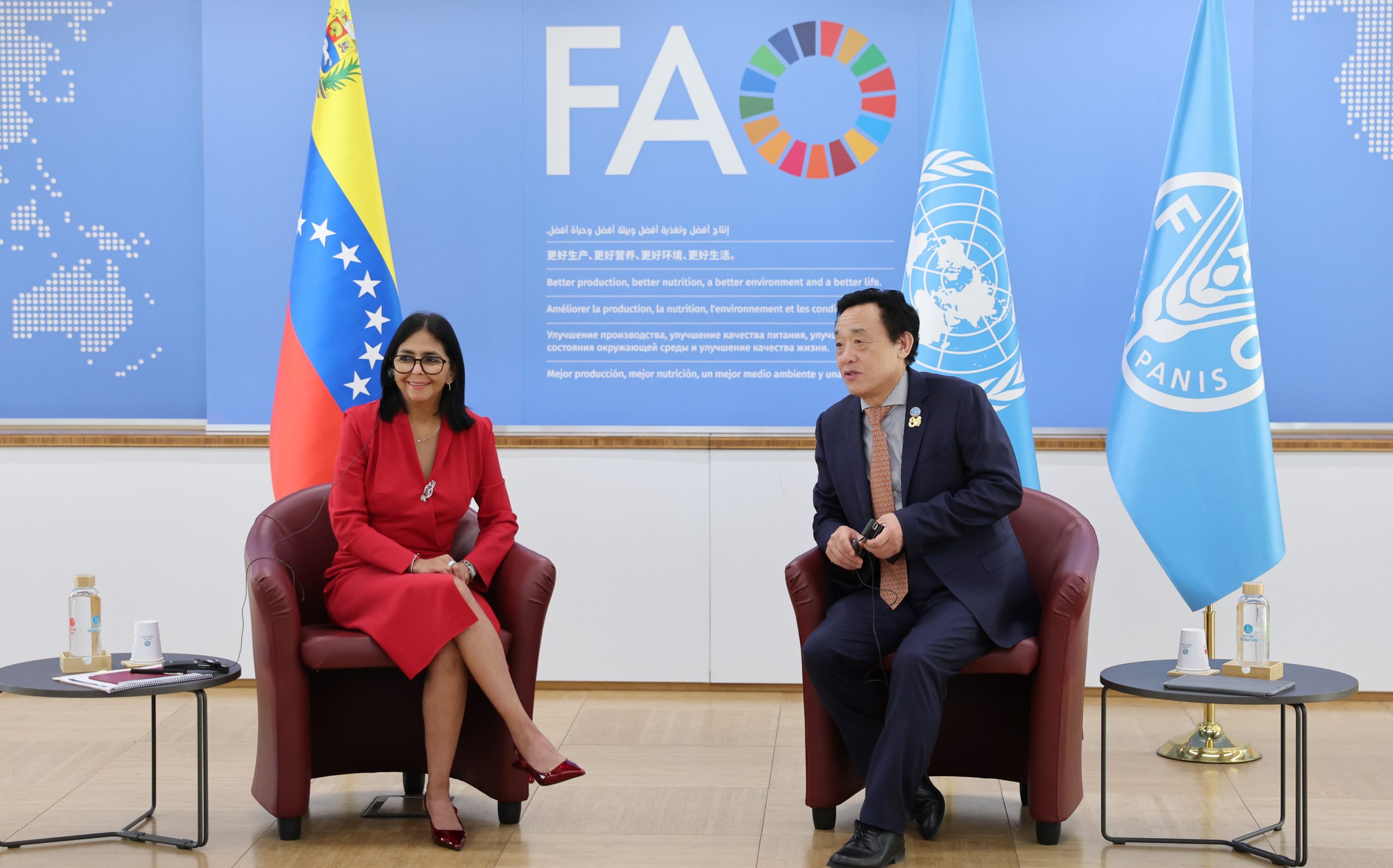
Rome, Italy.– With a strong message of sovereignty and a presentation on the achievements in social protection, the President of the Bolivarian Republic of Venezuela, Delcy Rodríguez, solidified an important path of strategic cooperation with the Food and Agriculture Organization of the United Nations (FAO) on Tuesday in Rome.
The bilateral meeting with the Director-General of this multilateral organization, Qu Dongyu, reaffirmed recognition of Venezuela’s vast agricultural and productive potential, while opening new opportunities for technical cooperation to support national efforts toward recovery, modernization, and economic diversification, particularly within the framework of the “Venezuela Alimenta” Plan, with a view to promoting agricultural development, scientific innovation, and the comprehensive well-being of Venezuelan households.
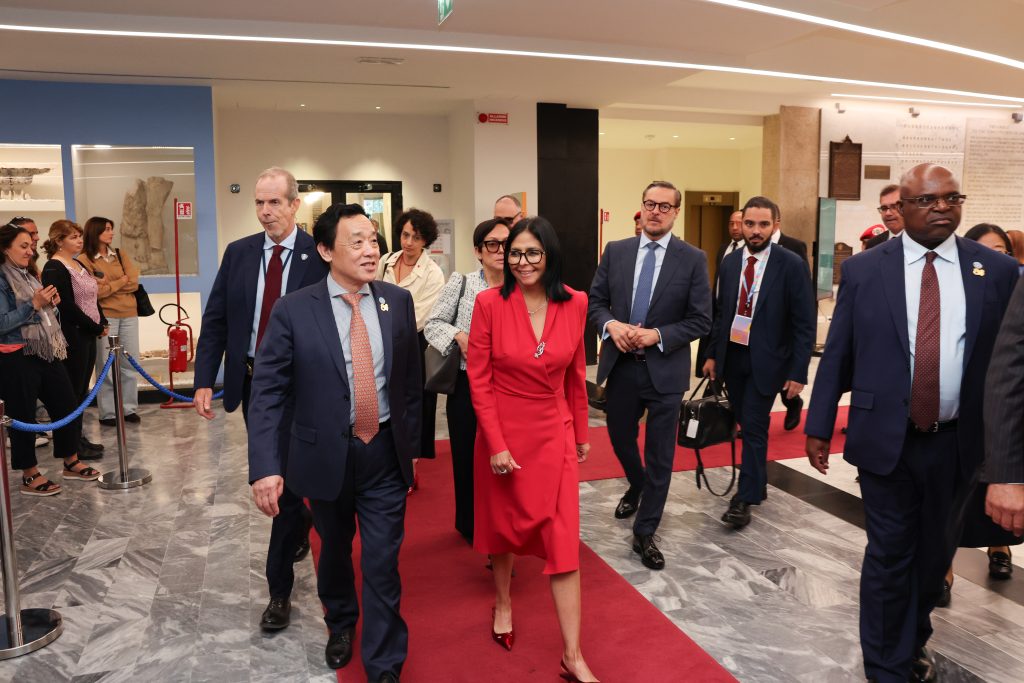
During these talks, the Venezuelan Head of State expressed her sincere appreciation for the FAO’s sustained work in the country and requested technical assistance focused on two strategic areas: support for the implementation of national policies on agricultural development and food sovereignty, and the strengthening of national statistical systems.
This latter initiative seeks to improve data collection, ensuring the highest standards of quality, comparability, and international recognition for the nation’s food and nutrition indicators.
In this context, the Venezuelan Head of State emphasized that the country is moving toward a new stage of economic development, in which the recovery of domestic production must be accompanied by greater technological capabilities, productive investments, and export diversification. She underscored that cooperation with the FAO represents an opportunity to consolidate these advances and transform the country’s agricultural potential into new sources of growth, employment, and well-being for the Venezuelan population.
Victory for the Social Model: Achievements in Social Protection and Domestic Production
During the event, the President outlined the remarkable progress of the nation’s social protection programs. Among the highlights is the School Feeding Program (PAE), which guarantees continuous nutritional support to nearly 2.5 million children through two meals a day.
She also highlighted the work of the Food Centers, which serve some 700,000 people daily, and the direct nutritional protection mechanisms focused on 300,000 older adults and vulnerable sectors, ensuring the distribution of high-quality protein-rich foods.
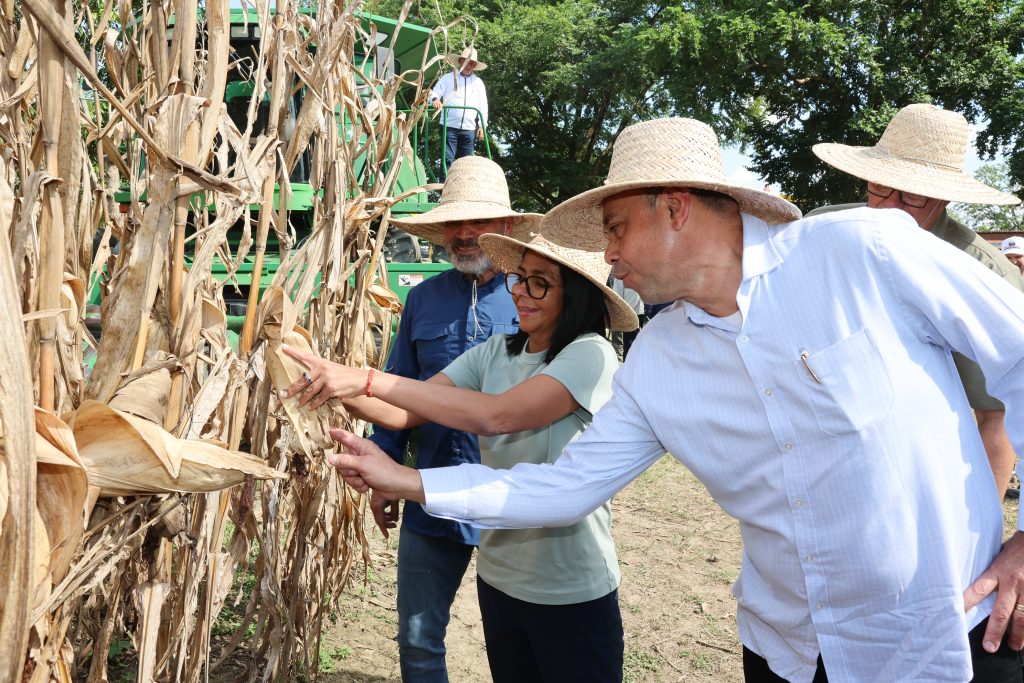
A fundamental pillar highlighted at the meeting was the consolidation of food sovereignty: approximately 90% of the food consumed in Venezuelan households and 99% of the supplies allocated to social assistance programs are produced entirely within the country.
On the issue of nutrition, it was emphasized that, after achieving an undernourishment rate of 5.3%—as recognized by the multilateral organization—national projections for the year 2026 point to a historic reduction, bringing the figure down to around 3%.
Innovation, the Scientist-Farmer Alliance, and a Sovereign Response
President Delcy Rodríguez shared the experience of the Scientist-Farmer Alliance with the FAO, an innovative model that brings together the capabilities of scientific, technological, and agricultural institutions with the knowledge of national producers.
This helped raise the profile of initiatives aimed at the conservation of heirloom seeds, regenerative agriculture, the strengthening of productive capacities, and active adaptation to climate change, in addition to the notable revitalization of traditional export and domestic consumption sectors such as coffee and cacao. All of this is supported by an innovative legal framework for the region.
Likewise, other opportunities were identified to explore cooperation in digital transformation, the development of green cities, and the strengthening of climate resilience. These initiatives take on special relevance in the context of the “Venezuela Renace” Plan and the recovery and reconstruction efforts following the twin earthquakes of June 24, guided by the core principle of “building back better” through sustainable, inclusive solutions tailored to the needs of communities.
International Recognition of the Country’s Productive Potential
FAO Director-General Qu Dongyu explicitly recognized the extraordinary agricultural potential of the Bolivarian Republic of Venezuela, which is bolstered by its vast arable land, abundant water resources, ideal climatic conditions, and ample energy capacity.
He also reaffirmed the FAO’s full willingness to provide specialized knowledge, modern methodologies, technical training, and tools to help transform sovereign initiatives into viable projects that are highly attractive for productive investment.
The Director-General also shared international experiences regarding the importance of ensuring stability and predictability in public policies, promoting incentives for scientific and technological innovation, and modernizing agricultural information systems as well as land and territorial registries. He emphasized that these tools can help create favorable conditions for productive investment, improve agricultural planning, and make more efficient use of national capacities.
In this regard, the FAO offered to channel its technical cooperation instruments, including the Technical Cooperation Program (TCP), paving the way for concrete projects in agricultural digitization, aquaculture, and the strengthening of strategic products, efforts that align with ongoing initiatives to boost non-traditional exports, including in sectors such as coffee.
As a result of the meeting, both parties expressed their willingness to move forward in defining a technical cooperation agenda, with a view to identifying priority projects and preparing concrete proposals by early 2027. This roadmap will allow for the continuation of high-level dialogue and the exploration of technical assistance mechanisms that contribute to translating the identified opportunities into a concrete and operational agenda of shared successes for the well-being of Venezuelan families.
Bolivarian Peace Diplomacy in a New Multipolar Era
One of the central aspects of the meeting was the FAO’s willingness to support the development of agricultural production projects that, through specialized technical assistance, can become viable initiatives for mobilizing international investment and financing. This approach will allow for the exploration of new opportunities to strengthen domestic production, incorporate technologies, develop value chains, and expand the export capacities of the Venezuelan agri-food sector.
This meeting is an expression of Bolivarian Peace Diplomacy, which promotes constructive dialogue, international cooperation, and the strengthening of multilateralism as tools to advance development and the well-being of peoples. The agenda discussed in Rome reaffirms Venezuela’s commitment to expanding its international partnerships, strengthening its relations with the specialized agencies of the United Nations system, and capitalizing on opportunities for technical cooperation and the mobilization of resources and investments in line with national priorities, guided by a clear vision for development.
The consolidation of this path of cooperation with the FAO not only demonstrates the prestige and technical expertise of the Venezuelan State in defending the fundamental right to food but also reaffirms the Bolivarian Government’s capacity to lead initiatives with social and productive impact that serve as a model for the peoples of the Global South in building a multipolar, just, and truly solidarity-based world.
In this way, Venezuela continues to advance into a new phase of recovery, reconstruction, and development, in which food security, scientific innovation, and productive transformation constitute fundamental pillars for consolidating a more diversified, resilient, and sustainable economy. The joint work with the FAO represents an opportunity to transform the country’s potential into concrete results that contribute to the well-being of Venezuelan families and the strengthening of international cooperation.
Presidential Press Office / Iliana Rosales / MLBL